
Cheesecake cracking is a big problem….imagine staring at $20 worth of ingredients with something resembling the Grand Canyon right in the center.
Yikes! I hope the line isn’t too long at the bakery!
Yet there are things you can do to stack the deck in your favor…
Let’s dive in, shall we?
| PROBLEM | WHAT IT DID |
| INGREDIENTS NOT AT ROOM TEMPERATURE | THE EGGS AND CREAM CHEESE DIDN’T BLEND PROPERLY |
| OVERMIXING INGREDIENTS | INCORPORATES TOO MUCH AIR IN THE BATTER |
| OVERBAKING | COAGULATES THE EGGS |
| FAST TEMPERATURE SHIFT (COOLING TOO RAPIDLY) | CAUSES THE CAKE TO CONTRACT TOO QUICKLY |
| NO WATERBATH | CHEESECAKE DRIES OUT |
| PAN NOT GREASED | CHEESECAKE STICKS TO SIDE OF PAN WHILE STILL BAKING |
| BAKED ON UPPER RACK | TOP DRIES OUT/BURNS/CRACKS |
| NOT RELEASING CHEESECAKE PROPERLY | CHEESECAKE STICKS TO SIDE OF PAN WHILE COOLING |
Let’s take ’em one by one…
INGREDIENTS NOT AT ROOM TEMPERATURE
Especially important for the all the liquid ingredients, and the eggs too.
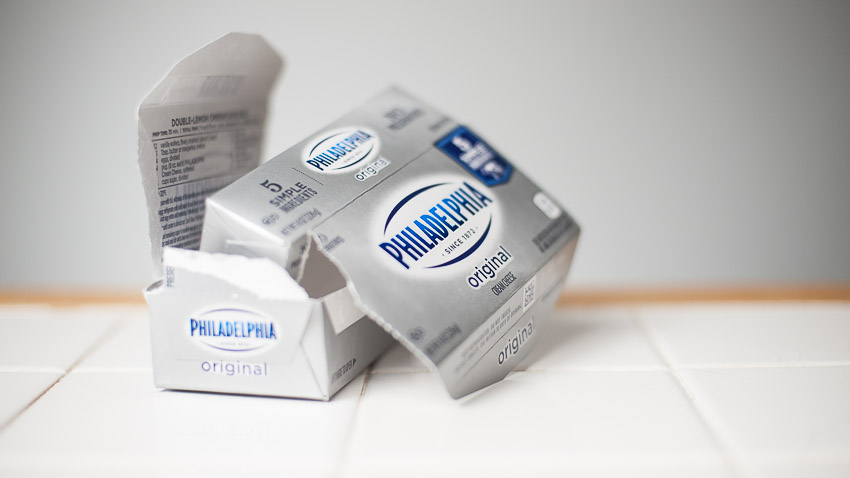
Typically you’ll be using bricks of Philly, heavy cream, sour cream…they all have to blend smoothly with each other.
If the ingredients are cold you’ll have to mix them longer to combine, which is going to introduce too much air into the batter (plus the final texture won’t be smooth and creamy).
This leads us to…
OVERMIXING INGREDIENTS
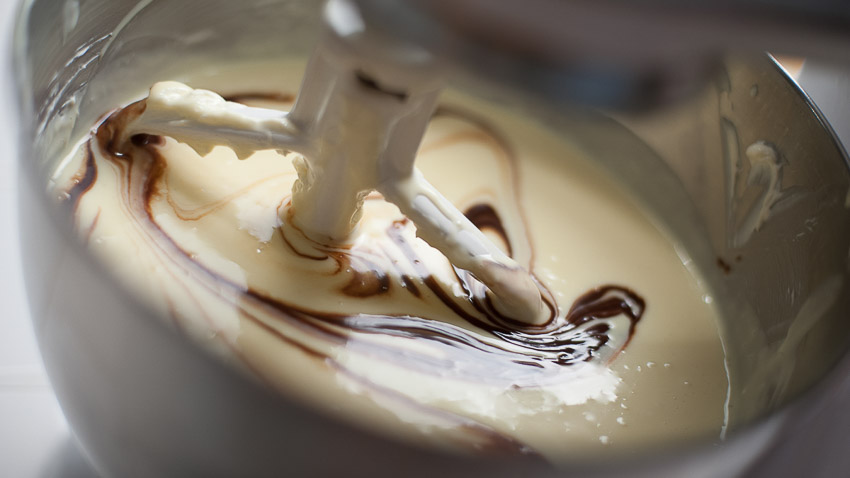
Again and again in cheesecakeMAX directions you’ll see “just incorporate”.
Over mixing, getting too much air in there causes the ingredients to get too fluffy. The cheesecake will soufflé up and pull apart on the way down.
As a rule, add each ingredient and mix at low speed until you see that ingredient just disappear into the batter.
Especially with the eggs. In fact, some but not all recipes call for the eggs to be added last, and just mix until no streaks of yellow. Whether you put them in right after the cream cheese step or at the end, fully incorporate but not a bit more.
Note: The initial step is always the cream cheese. Beat on low or medium low until creamy but no more (then drop to low for the rest of the ingredients). If you see little lumps in there but can’t get rid of them, leave ’em be; we can run the batter through a strainer before it goes into the pan.
Do not overbeat!
OVERBAKING
The eggs are the big factor here. The eggs and the proteins therein. (Always wanted to use that word…therein. Pretty hifalutin’, huh?)
You want the eggs to coagulate and support the batter, but not over coagulate. If the heat is too high or the cake is baked for too long the eggs will dry out, making the whole structure inflexible.
It can start cracking either while it’s baking or as it cools down.
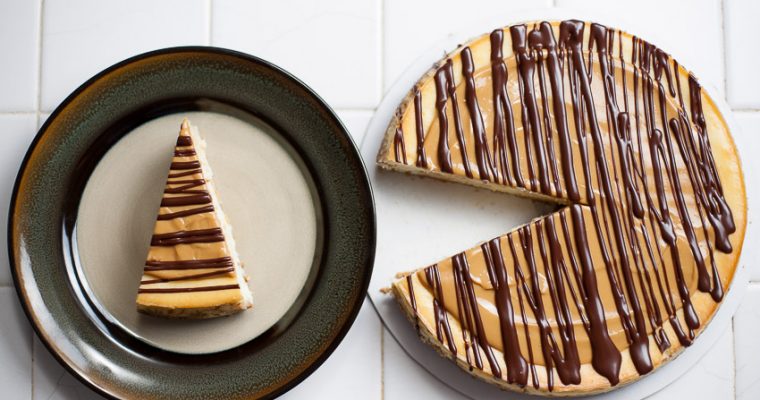
The cheesecake at the top of this post was overbaked…see how brown the edges are? It didn’t pull apart in the oven but immediately upon removal.
LET’S GO OFF ROAD FOR A SEC…
How do you know when your cheesecake’s done?
–the edges are set but there’s still a wobble in the center. Not liquidy…but Jello-like in the center 2-3 inches.
–the temp in the center of the cake is 150 degrees but no higher. You determine this by sticking a meat thermometer in the center of the cheesecake….
I’ve never been a fan of this method…it feels like sticking a finger in the Mona Lisa’s eye…not my cup of tea.
…STILL OFF ROAD…
All the variables have to be controlled…
You’ve got a better chance of success if you’re sure of your oven temperature.
The only way you know this is with an independent thermometer sitting on a baking sheet which is sitting on the middle rack while you’re preheating the oven.
Here at cheescakeMAX we have a back-in-the-day oven that’s probably 50 degrees off from the dial reading.
Now, let’s take this a step further:
We bought a highly rated (but not expensive) oven thermometer but the cheesecakes were overbaking…couldn’t figure out why.
Our $8 thermometer was off.
We found this out by getting two identical, highly rated thermometers of another brand and putting all three in the oven together.
The two new thermometers had identical readings, but the first thermometer was way off.

So we pitched the first thermometer and kept the two….and each time we preheat the oven those two thermometers are standing side by side (kinda) on a baking sheet on the middle shelf.
You can’t be too careful.
FAST TEMPERATURE SHIFT (COOLING TOO RAPIDLY)
The cheesecake is a gentle thing, a custard, and it needs to cool down and contract SLOWLY. The whole thing needs to shrink as a unit, not at different rates around the cake.
Couple things here:
–leave the oven door closed for the first half hour of baking…it’s kinda like a traditional cake in this sense…no sudden temperature changes, no influx of cold air.
You may have to judge the doneness later on but do this toward the end; if a recipe calls for 55-60 mins, start checking a couple minutes before the 55 mark…just be gentle!
–lots of bakers recommend turning off the oven and letting the cheesecake cool down for an hour with the door closed.
We’re kinda leery of doing this if the cheesecake is already looking done, so we might settle for turning the oven off and cracking the door to the first notch (détente if you’re in France) and letting it cool that way.
–whether you pull the cheesecake right away or keep it in the oven awhile, place it on a cooling rack and put it in an area with no drafts until it hits room temperature. Not near any fans, not under any AC ducts…serious!
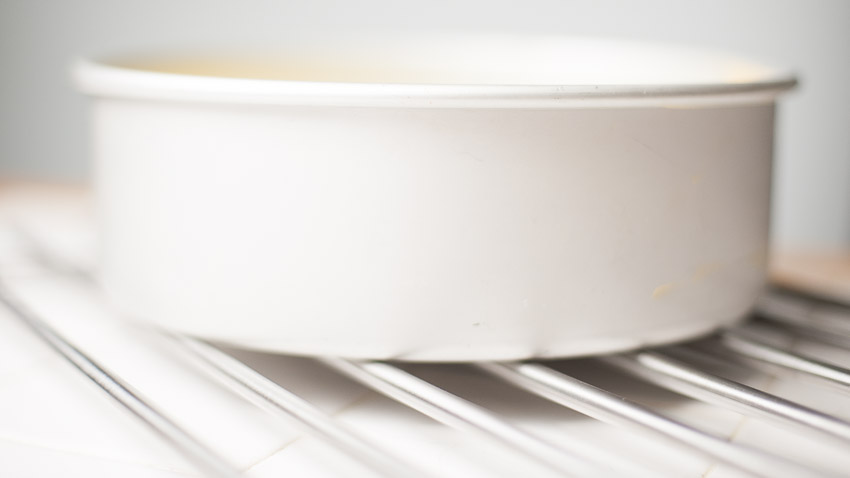
And keep that cat outta there!
NO WATERBATH
The bain marie lends a moist creaminess to the cheesecake. Excellent texture.
Also, it keeps the edges from cooking ‘way ahead of the center, which can cause the cheesecake to crack while baking or while cooling down.
Follow the directions for the recipe you’re using; they’re usually pretty thorough.
That being said, you may have noticed that we don’t really use a waterbath.
That’s because they’re a logistical nightmare plus if they go wrong you’ve got one kayaked cheesecake.
We use the Cheesecake Moat (explained in detail in the Bacon Cheesecake! recipe), but there are several other ways to achieve great results.
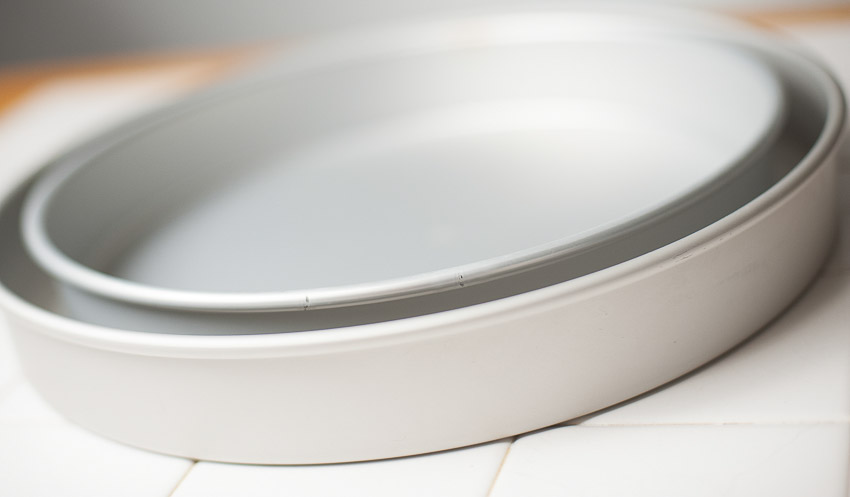
Those will be detailed in another article; we’ll include a link here as soon as it’s up…
PAN NOT GREASED
As the cheesecake heads toward done, it may or may not start pulling away from the edge of the pan.
Different recipes act differently.
But if it does want to start pulling away, the edges cannot stick to the sides of the pan; wholesale chaos will result.
Also, if the sides are not greased the cheesecake will climb too far up the sides of the pan while baking…
No doubt you’re familiar with the Humpty Dumpty story…
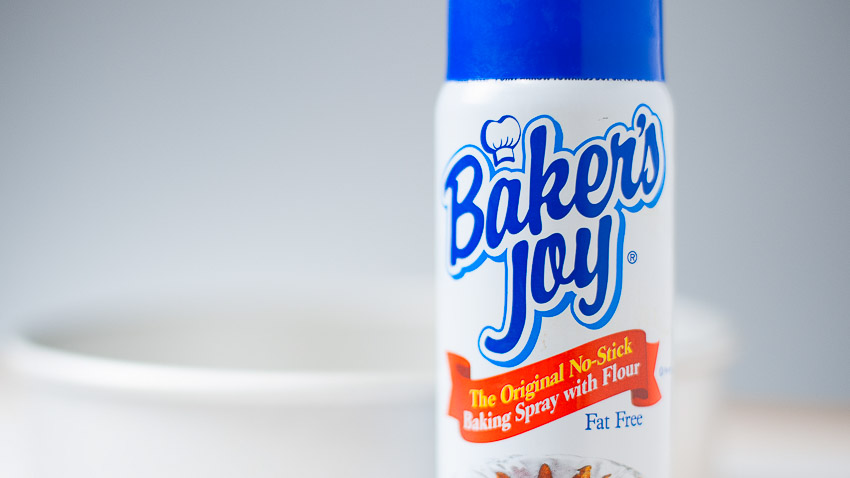
Most recipes recommend buttering the sides for cheesecakes; we like Baker’s Joy.
It’s a vegetable spray but mimics a combination of butter and flour, and works really well.
You can thank Fat Daddio’s for that recommendation!
BAKED ON UPPER RACK
This one is obvious…always use the middle rack, make sure you’re satisfied with the temperature first…
NOT RELEASING THE CHEESECAKE PROPERLY
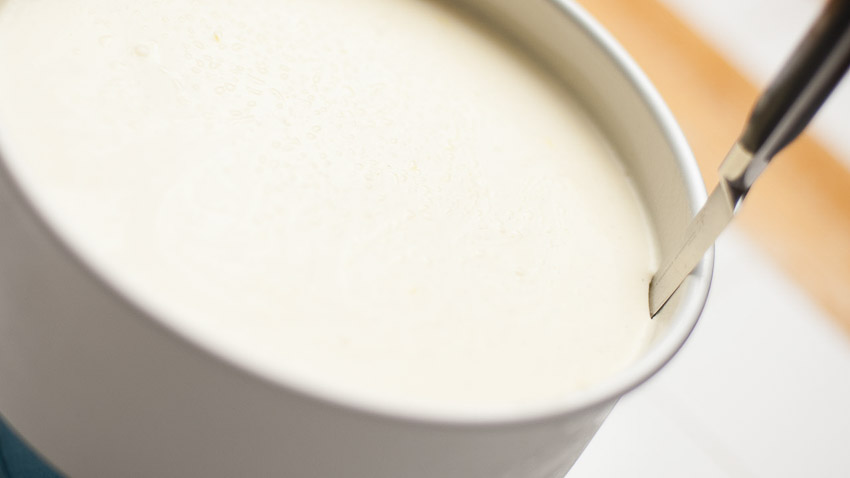
As soon as the cheesecake comes out of the oven, run a thin sharp knife around the inside edge of the pan.
(The actual releasing will be done later; this is the first step.)
The cheesecake is about to drift from maybe 150 degrees to room temperature, before it goes into the refrigerator for the night.
This is a big drop, and we need to make sure the cheesecake is completely freed from the walls of the pan.
No unwanted stresses!
SO THERE YOU HAVE IT…
If you have any thoughts or want to add another thing that causes cracking, please let us know, max@cheesecakemax.com
And as always, if you’d like to share a baking tip or recipe, please contact us!
Pinkies up!

LINKS:
Bacon cheesecake! YouTube video
Bacon cheesecake! full tutorial
Fat Daddio’s 2-piece cheesecake pan 9×3
IKEA 11 X 20 cooling rack
What to Drink with What You Eat